Scareware: Fake Minecraft apps Scare Hundreds of Thousands on Google Play

Archived coverage of fake Minecraft apps on Google Play and the scareware reported in 2015.

ESET has discovered over 30 scareware applications available for download from the Google Play store. The malicious applications, which pretended to be cheats for the popular Minecraft game, have been installed by more than 600.000 Android users.It’s not easy to slip a malicious application into Google’s official Play Store these days. Google’s automated application scanner, Bouncer, helps in reducing the number of malware on the official app store. Yet, some baddies do occasionally get by, as demonstrated by our recent discovery of over 30 scareware applications that have been uploaded to the Play store in the course of the last 9 months
Read on, source: Scareware: Fake Minecraft apps Scare Hundreds of Thousands on Google Play

For a game-related app, check who published it and whether it appears on the publisher’s official channels. A familiar icon or name can make an unrelated app look convincing.

Related reading: App Permissions: What to Look Out For.
Microsoft’s Windows Store Cleanup (2015)

A laptop displays a fictional desktop app store.

Archived coverage of the Windows Store and Microsoft’s efforts to improve the quality of its app listings in 2015.

Last August, Microsoft announced efforts to remove misleading and deceptive applications from the Windows Store. Apps needed to have clear names and proper categorization, plus they couldn’t use misleading icons.Less than a year later, Microsoft has announced a new effort to remove misleading and deceptive applications from the Windows Store. While this new decrapification process isn’t identical to the old one, it nonetheless feels very similar.

Read on, source: De-crapping the Windows Store, take two | Ars Technica

Store cleanup is partly a discovery problem. When the listings are crowded with misleading names or near-duplicates, it gets harder to identify the developer and find the app you actually wanted.

Related reading: Windows 10 Upgrade Policy for Unlicensed Copies (2015).

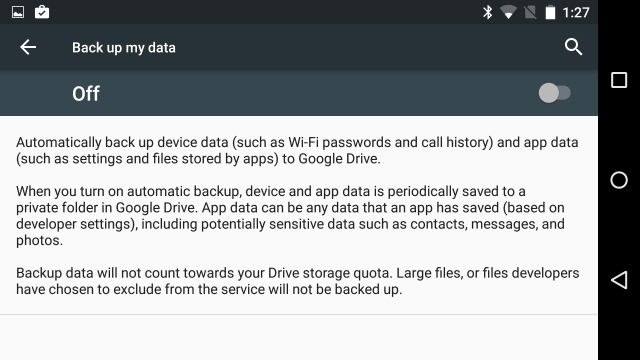
Android M makes another attempt at automated device backups

Archived coverage of Android M backups and Google’s attempt to improve automated app data backups.

We’ve got the Android M preview installed on some devices already, and we’re beginning to dig down past the major improvements that Google announced on stage earlier today. One of these is an improvement to Android’s backup system—if you choose to back up your device with a Google account, apps that target Android M and newer will have all of their data and settings backed up by default. That data can then be downloaded and restored to your phone if you get a new one or need to wipe it for some reason.
Read on, source: Android M makes another attempt at automated device backups | Ars Technica

A backup is easiest to assess by checking what comes back when you restore it. This preview-era article is useful for seeing what Android was trying to cover at the time, especially app data.

Related reading: Google Brillo: Android-Based IoT Preview (2015).

Proposed US Search Warrant Rules for Remote Access (2015)

A proposed rule change in 2015 raised questions about when US judges could issue search warrants for remote access investigations.

A controversial proposed judicial rule change allowing judges to issue warrants to conduct “remote access” against a target computer regardless of its location has been approved by a United States Courts committee, according to the Department of Justice.
Read on, source: Proposed rule change to expand feds’ legal hacking powers moves forward | Ars Technica

This is coverage of a proposal as it stood in 2015. Read it for the historical debate about remote searches. For the text of the rules in force today, check the current official US courts material.

Related reading: Password Recovery Questions: Google’s Findings.