0-day attack on Firefox users stole password and key data: Patch now!

A website in Russia has been caught exploiting a serious zero-day vulnerability in Mozilla’s Firefox browser, prompting the open-source developer to deliver an emergency update that fixes the flaw.The bug in a built-in PDF reader allowed attackers to steal sensitive files stored on the hard drives of computers that used the vulnerable Firefox version. The attack was used against both Windows and Linux users, Mozilla researcher Daniel Veditz wrote in a blog post published Thursday. The exploit code targeting Linux users uploaded cryptographically protected system passwords, bash command histories, secure shell (SSH) configurations and keys. The attacker downloaded several other files, including histories for MySQL and PgSQL and configurations for remina, Filezilla, and Psi+, text files that contained the strings “pass” and “access” in the names. Any shell scripts were also grabbed.

Read on, source: 0-day attack on Firefox users stole password and key data: Patch now! | Ars Technica

Long-line fishing with an electric kontiki

Beach long-line fishing has become extremely popular in recent years with the proliferation of electric torpedo fishing systems. With the ability to tow a beach long-line with 25 baited hooks kilometres out to sea, electric kontikis are an effective way to put high quality seafood on the table while enjoying a social family outing at the beach. John Eichelsheim takes a closer look…In 1947 Norwegian explorer Thor Heyerdahl, seeking to prove that Polynesia was settled by voyagers from South America, crossed the Pacific Ocean on a hand-built balsa raft named Kon-Tiki. By the early 1950s various raft-like contraptions used by Kiwi beach fishers to tow beach long-lines out to sea began to be called ‘kontikis’.

Read on, source: Long-line fishing with an electric kontiki – The Fishing Website

Crowdfund A Waterproof, Sonar-Toting Drone For Fishermen | Popular Science

Aguadrone, a crowdfunding project on Kickstarter by Daniel Marion, manages to combine the worlds of fly fishing and remote control aircraft, creating a waterproof quadcopter with some niche potential.Like the Splashdrone, the waterproof Aguadrone floats and carries a camera for underwater picture-taking. But photography is just the baseline here. What makes the Aguadrone a unique vehicle are the other pods that it can carry. There’s a sonar pod, which sends out a 300-foot Wi-Fi signal when in the water, sending its scans of the water below to a cell phone or tablet without the need for a cell tower. This means the pilot can look to see just how deep a river is, and maybe even find fish under the surface.

Read on, source: Crowdfund A Waterproof, Sonar-Toting Drone For Fishermen | Popular Science

BMW and Baidu will have a self-driving car in China “before the year is out”

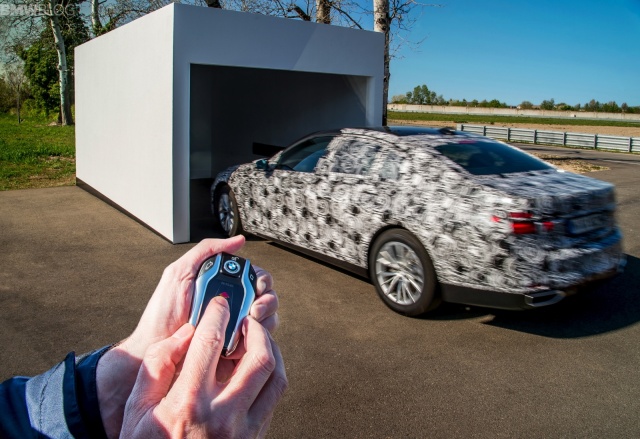
BMW, like most major car manufacturers, is getting to the point where it has mature semi-autonomous driving technology—lane keep assist, adaptive cruise control, self parking—and is now looking towards fully autonomous solutions. The new 2016 BMW 7 Series, unveiled just a couple of days ago, has features such as “speed limit obedience,” which uses a forward-facing camera to look for new speed limits; and self-parking with the driver outside of the car: just push a button on the key fob and marvel as the car parks itself (pictured top).As for BMW’s fully self-driving aspirations, however, the company is keeping its cards much closer to its chest than Google, which already has a fleet of autonomous cars driving the streets of California. Established car makers like BMW and Mercedes seem content to forge ahead with semi-autonomous features, while upstarts like Google test the fully autonomous waters. Google gets all the positive PR and column inches, of course—but it also gets to deal with all the legislative roadblocks that need to be defeated before driverless cars are a reality.

Read on, source: BMW and Baidu will have a self-driving car in China “before the year is out” | Ars Technica