Simpana Linux Clients: Archived Backup Notes

Two storage units and a terminal illustrate server backups.

Simpana Linux clients. From the archive, this post covers a Linux backup job that failed with error 19:599.

Recent experience with Simpana is that jobs are submitted to for backup yet fail instantly after the job is started with error 19:599. Not much to go by and not much in Google either; nor the forums.

This issue seems to happen after the upgrade of Ubuntu based client to OS and security patches to 14.04.

Re-installing, reboot of the client and connectivity tests (ping, dns resolution, telnet client 8400+8402 to CV, and Media box; then all the way back again) do not resolve the issue.

After enough days of reading longs, the /etc/hosts file was found to be bad in that erroneous entries as such were present:

127.0.1.1 Localhost

One would expect the CV agent to be bound to an IP address, however along the way you will be fooled by the simple fact that the machine is about to answer to pings, had the required ports open, dns also matches its IP address, and firewalls have been disabled for testing purposes, so, from a network point of view; all is well. Change this and you will be in business.

Resolution is as follows:

  • Change the /etc/hosts entry with your favorite txt editor hosts to the actual IP of the client:
    • Original – 127.0.1.1 Localhost
    • New – x.x.x.x fqdn
  • Restart of the Simpana services from terminal using sudo simpana restart 
  • Check that your services are running with sudo simpana list

You will now find out that restarting the job with allow for a successful backup.

Related reading: Backup: Notes from the Systems Admin Archive.

ChromeCast – $35 stick

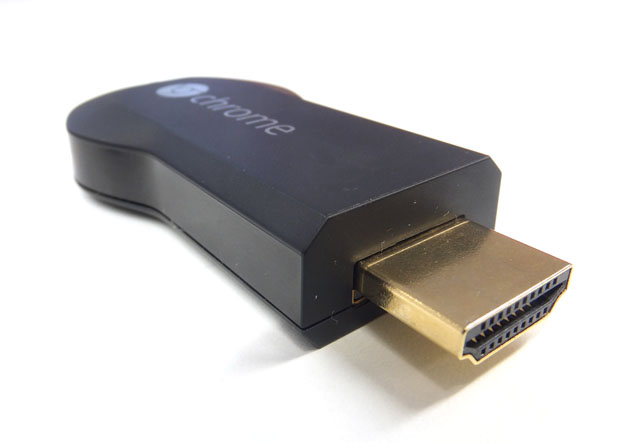
Chromecast in the archive. Early coverage of the original streaming stick and the $35 launch price.

Via theregister.co.uk.. Review Google’s Chromecast has finally gone on sale in the UK after an age of waiting following its initial US release in July last year. This digital media player in the form of an HDMI dongle delivers streaming content to a telly including support for the BBC’s iPlayer. It’s only 30 quid too – so you might as well buy one even if it turns out to be crap.
Google ChromecastHere at last, Chromecast
Well that’s kind of what happened to get a review sample in a timely fashion – with Amazon delivering the next day as promised. UK buyers can also find it at PC World and Currys for the time being. The Yanks have had plenty of time to get used to the idea of Chromecast and while streaming sticks and boxes are hardly unique, Google’s approach is rather different for computer use, as it relies on the Chrome browser being installed where individual tabs can be Cast to the Chromecast device.
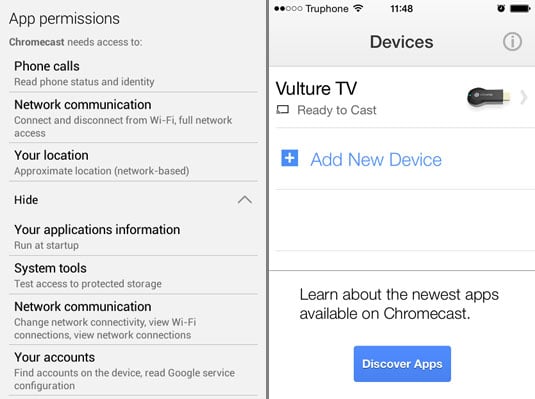
Google Chromecast Android prerequisites and iOS configuredGoogle Cast app: Android prerequisites (left) and iOS configured (right)
A cynic might argue that Chromecast is yet another way of broadening the user base of the Chocolate Factory’s surfing software. Perhaps, but there are iOS and Android Chromecast apps that locate and set up the device, as well as enabling other apps to cast to the diminutive Google …. article continues here I take no credit for the article, merely supporting a worthwhile site. And for a little Youtube demo:

Related reading: Microsoft Cloud Strategy: Archive.

Battery Technology: Two Challenges in the Archive

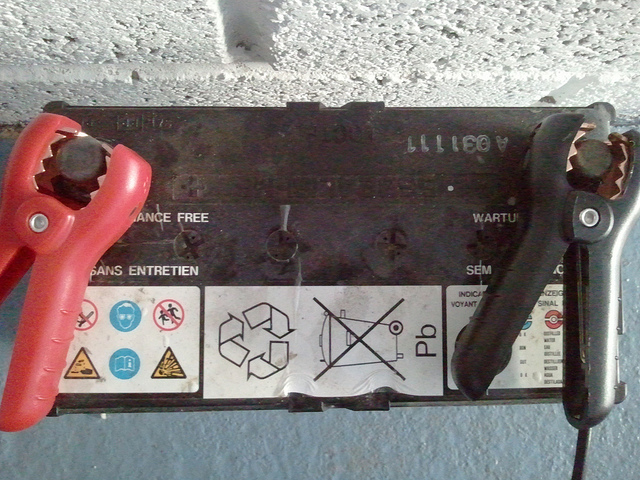
Battery technology in the archive. Energy storage challenges for the power grid and electric vehicles.

one for the electric grid, one for cars. We mostly think of batteries in terms of gadgets like phones and laptops. Although we’d all love lighter weight, higher capacity, and faster charging for our gadgets, progress for this type of battery has for the most part already made huge strides. The modern battery is largely keeping pace with our needs. But two other big potential users of batteries—the electric grid and automobiles—haven’t really found the better technology they need. Based on a panel discussion at this year’s meeting of the American Association for the Advancement of Science, that’s more of a challenge than it sounds, since the two battery uses need very different things.
What the grid needs

The grid perspective was handled by Haresh Kamath of the Electric Power Research Institute. He began his talk by noting that the whole purpose of the grid is to let you disconnect the generation of power from its use in space, letting people take advantage of efficiencies of scale and location. Energy storage does the same thing but across time, allowing power to be generated when it’s cheapest and then used as needed. So far, however, storage has meant pumped hydropower or compressed air, both of which require specific geologies to make sense. On the other hand, batteries can go pretty much anywhere and perform a variety of functions beyond simply holding onto electricity for future use. They can help regulate the grid’s frequency, and their distributed nature can help with stability in cases of equipment failure. But since the grid hasn’t historically had much storage, these factors are treated as intangibles and priced accordingly. That situation is starting to change as a regulatory structure is put in place and states begin to consider mandating a certain level of utility-grade storage. Notably, California now has a mandate for 1.3GW·h of storage. The challenge will be that very few of the battery technologies available in mass quantities offer what the utilities need: “Utilities want 15-20 year life spans and minimal maintenance,” Kamath said. And they have to deliver that at a price of about $500 per kilowatt-hour (kW·h) to make economic sense. This only works if the intangibles Kamath mentioned are actually given a price. Lithium batteries are only getting close to being there price wise, but they don’t offer the durability the utilities need.

What the automakers need

What lithium batteries do have is a relatively low weight for the energy they store, which fits the needs of a different market—cars. GM’s director of fuel cell research, Mark Mathias, was in attendance to speak for the automakers. His field might seem like an odd match for batteries, but it’s more relevant than you might think. “In our mind, fuel cell vehicles are electric vehicles,” Matthias said. “In this case, you’re just making the electricity on the vehicle.” And if you’re making an electric vehicle, you have to decide when it makes sense to generate that electricity, or when it’s better to store it. In some ways, Mathias suggested, current lithium batteries are doing pretty well. He noted that plug-in hybrids are already ahead of where the Prius was at this point in its history, and he referred to the “surprise” of what Tesla could accomplish at the high end. Read the rest of the article here:http://arstechnica.com/science/2014/03/batteries-whats-here-versus-what-we-need/ I take no credit for this article but endorse ARSTechnica.com

Related reading: ARM Cortex-A72: Archived Launch Coverage.
Scientists revive largest virus yet from 30,000-year-old permafrost

Permafrost virus in the archive. Historical science reporting on a discovery in ancient permafrost.

Up until recently, the line between viruses and cells seemed pretty simple: cells were big and carried everything they needed to live and grow. Viruses were tiny and only carried the genes they needed to take over their host cells; they relied on their hosts for most essential proteins. That line got a bit blurry as we found parasitic and symbiotic cells with very stripped-down, minimalist genomes that wouldn’t let them survive outside their hosts. But it’s nearly been obliterated by the discovery of giant viruses—some of these have genomes that are larger than those of bacteria and carry many of the genes needed to copy DNA and translate it into proteins. Scientists have now identified yet another giant virus, this time using a technique that sounds like it’s straight out of a sci-fi horror flick: they thawed some 30,000-year-old permafrost and allowed any viruses present to infect some cells. Fortunately, the cells were amoebas, and this virus is overwhelmingly unlikely to present a threat to human health. But the fact that viruses could apparently survive so many centuries in the Siberian permafrost does lead the authors to suggest that the melting Arctic may pose an emerging disease risk. The rest of the article: http://arstechnica.com/science/2014/03/scientists-revive-largest-virus-yet-from-30000-year-old-permafrost/ I take no credit for this article but endorse ArsTechnica.com.

Related reading: Battery Technology: Two Challenges in the Archive.